THE LIVES OF STARS · 2 MIN READ
Why do stars shine?
Behind a star's steady glow lies a balance between gravity and pressure in hot matter.
Born in a cloud
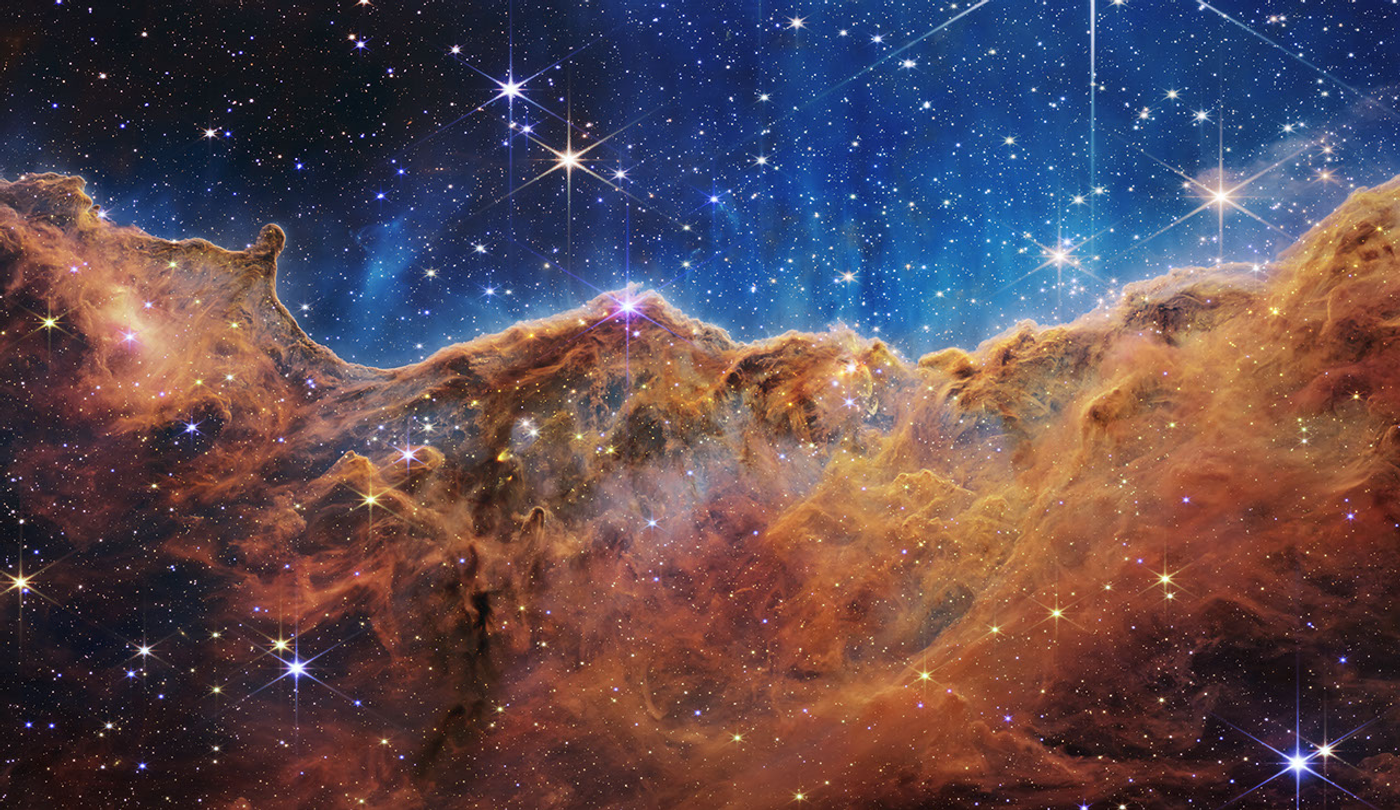
Stars form in large clouds of gas and dust. As gravity draws part of a cloud together, the material heats up, producing a protostar: the precursor of an ordinary star.
Energy from the core
At sufficiently high temperatures and pressures, nuclear fusion begins. Hydrogen nuclei combine to form helium, releasing energy. That energy heats the star and eventually escapes as radiation.
A lasting balance
Gravity pulls the star inwards, while pressure resists compression. Steady hydrogen fusion defines the main sequence, the longest stage of a star's life. The Sun is a main-sequence star.
Different endings
Mass strongly influences a star's lifetime. Massive stars use their fuel faster. As core conditions change, further stages follow. A Sun-like star ultimately leaves a white dwarf; more massive stars can meet different ends.
Main-sequence stars draw their energy from nuclear fusion in their cores.